
5 Crucial Signs You Need Pitch Fibre Pipe Repair Now
Failing pitch fibre pipes in Bracknell cause blockages and leaks. Our trenchless relining fixes “egg-shaping” without digging, saving you from costly excavations. Act now to protect your property!
- 7 min read
Key Insights Summary
Pitch fibre pipes, installed predominantly between the 1950s and 1970s, have an estimated lifespan of 40 years, meaning most are now failing. Signs of a collapsed pitch fibre pipe include persistent blockages, sewage smells, and unexplained damp patches or ground subsidence near your property. Because these pipes are made of wood cellulose and coal tar, they are prone to “egg-shaping,” blistering, and delamination. Trenchless pitch fibre pipe repair methods, such as CIPP (Cured-In-Place Pipe) lining or re-rounding, often eliminate the need for costly, disruptive excavation. Prompt professional intervention is essential to prevent structural damage and environmental contamination.
The Silent Crisis Beneath Bracknell
Whether you live near the historic Bracknell, commute via the main Road, or enjoy the scenery along the main street, your home’s infrastructure is subject to the same hidden risks as any property built in the post-war era. Our team has spent years navigating the unique drainage challenges of the Bracknell region. We often encounter homeowners who are entirely unaware that their property is serviced by “ticking time bombs”—pitch fibre drains.
When a Lead Engineer from our team arrives at a property, they often hear the same story: “The drain was fine yesterday, why is it blocked today?” The reality is that these pipes don’t just “fail” overnight; they endure a long, slow process of material degradation.
Technical Analysis: The Chemistry of Drainage Failure
To understand why your drain is failing, we have to look at the material science. Pitch fibre pipes are essentially tubes of wood cellulose impregnated with coal tar pitch. They lack the structural rigidity of modern uPVC or vitrified clay.
- Saponification and Thermal Stress: Modern household detergents and hot water act as solvents. The coal tar pitch binder can soften when exposed to sustained high temperatures (like those from a modern dishwasher or power shower).
- Creep and Deformation: Because the material has low tensile strength compared to modern standards, it is susceptible to “creep”—a slow deformation under the weight of the soil above. This leads to the characteristic “egg-shaping,” where the pipe ovalises, significantly reducing the available cross-sectional area for flow.
- Delamination: As the binder ages, the cellulose layers begin to separate. This creates internal “blisters” that act as snags for debris, leading to recurring blockages that standard high-pressure water jetting (using equipment like Whale Tankers’ high-flow jets) may inadvertently worsen by tearing the delicate, blistered internal wall.
3 Signs a National Franchise is Overcharging You
When you’re panicked by the prospect of a sewage backup, it’s easy to become a target for aggressive sales tactics. Here is how to spot when a national franchise might be padding the bill:
- The “Instant Replacement” Narrative: If a company immediately suggests full excavation before performing a thorough CCTV drainage survey with professional software like Wincan, be cautious. Trenchless repairs are viable in many scenarios.
- Lack of Diagnostic Imagery: A professional will show you the footage. If they claim a pipe is “beyond repair” but refuse to show you the high-definition video evidence of a total structural collapse, they may be looking for an easier, higher-margin job.
- Pressure Tactics Regarding Asbestos: While some pitch fibre pipes contain asbestos, it is bound within the matrix. If a contractor uses the word “asbestos” to induce fear and justify an exorbitant “specialized removal” quote without providing a clear risk assessment, get a second opinion.
How to Repair Pitch Fibre Drain Pipe Safely
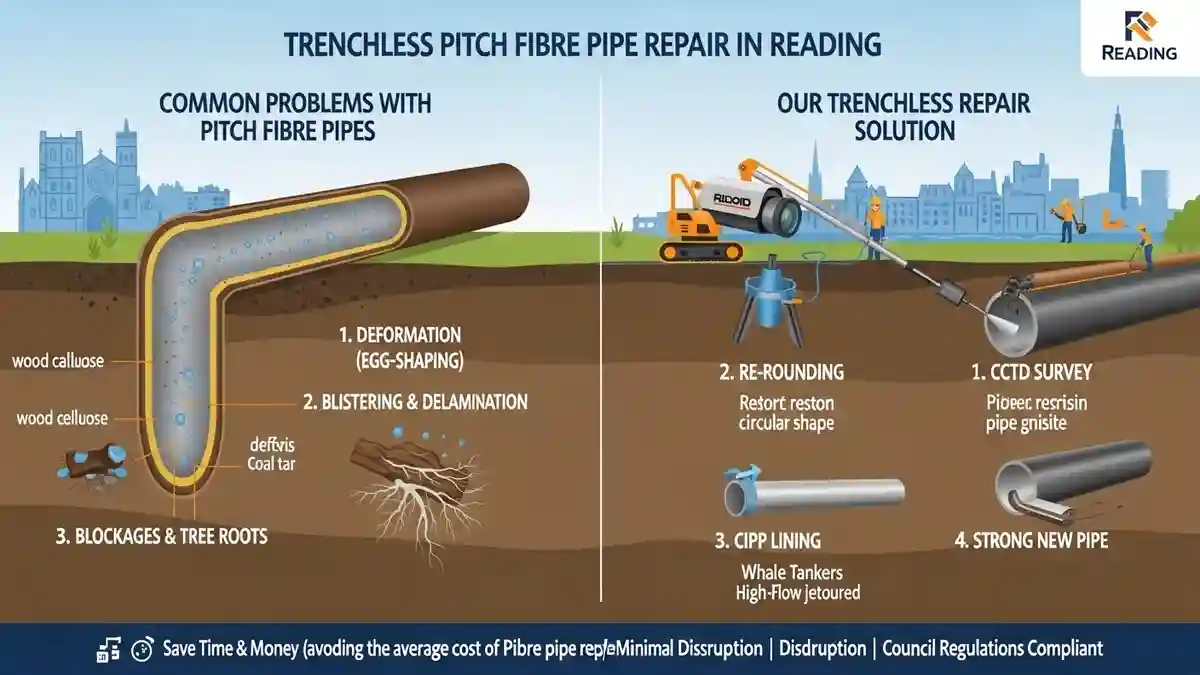
“How to repair a pitch fibre drain pipe” is the most common query we receive. The answer is: never attempt a DIY fix. Pitch fibre requires specific, expert handling.
We use trenchless pipe repair methods whenever possible. This involves using specialized “re-rounding” cones to restore the pipe to its original circular profile, followed by a CIPP lining. Using a resin-impregnated liner, we create a “pipe-within-a-pipe” that is structurally sound and chemically resistant.
Cost to Repair Pitch Fibre Pipes vs Replacement
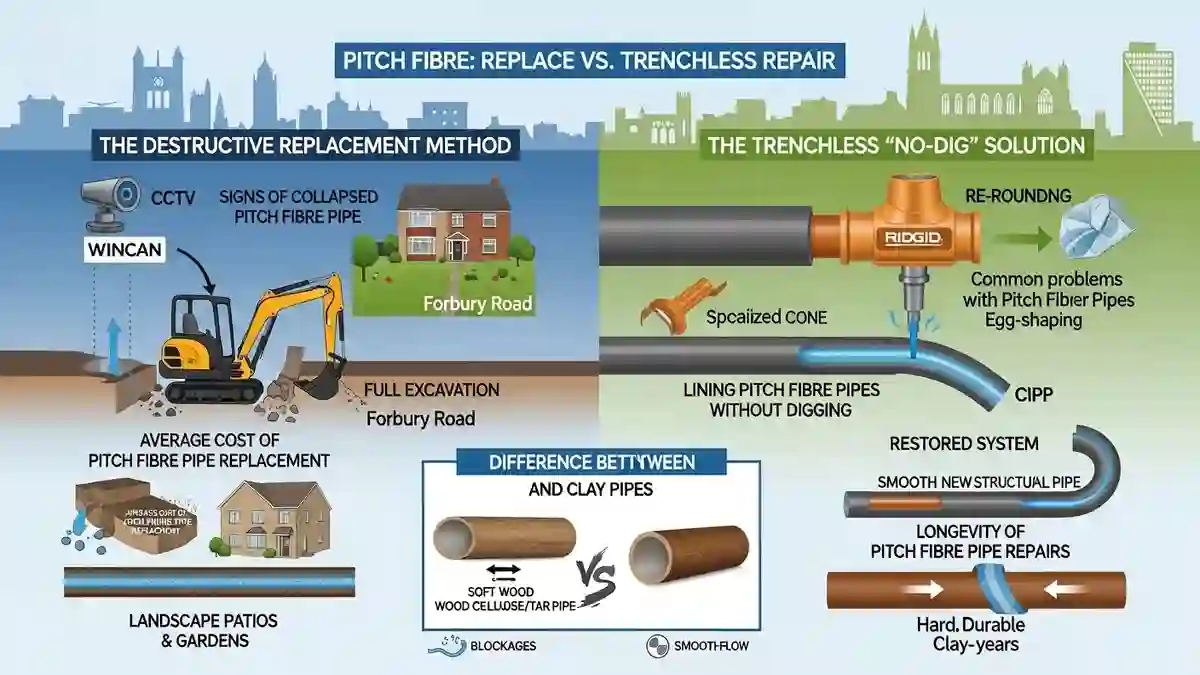
“How much will this cost me if I wait?” This is the question that keeps homeowners up at night.
If you address the issue early—when the pipe is merely deformed or has minor cracking—you can opt for relining, which is significantly more cost-effective. If you wait until a full collapse, your only option becomes the average cost of pitch fibre pipe replacement, which involves excavation and landscaping restoration.
| Method | Estimated Cost Range | Disruption Level |
|---|---|---|
| CCTV Survey | £150 – £250 | None |
| Patch Repair/Lining | £500 – £1,500 | Minimal |
| Full Excavation | £2,500 – £6,000+ | High |
Are There Council Regulations for Pitch Fibre Pipe Repair?
In the UK, your private drainage system is your responsibility, but work must comply with Building Regulations. This ensures that any repair—whether lining or replacement—maintains the correct gradient and material standards to prevent future blockages and protect public health. Any reputable company should be able to provide documentation certifying that the repair meets these standards.
Longevity of Pitch Fibre Pipe Repairs
Final Thoughts: Don't Wait for the Collapse
FAQs
Are pitch fibre pipes dangerous to health?
Can home insurance cover pipe repairs?
Will pipe issues devalue my house?
Can I join plastic to fibre?
What happens if I ignore them?
Talk to your local Bracknell Drainage specialist
We are always happy to arrange a free site assessment and no obligation quotations for any work you might need. Alternatively, you can call our emergency hotline number on