
7 Expert Tips for Flawless Driveway Drain Installation
Stop driveway erosion in Bracknell with expert drain installation. Prevent costly structural damage by using the right pipe sizing and trench drains. Don’t wait—protect your home’s value today!
- 8 min read
Key Insights Summary
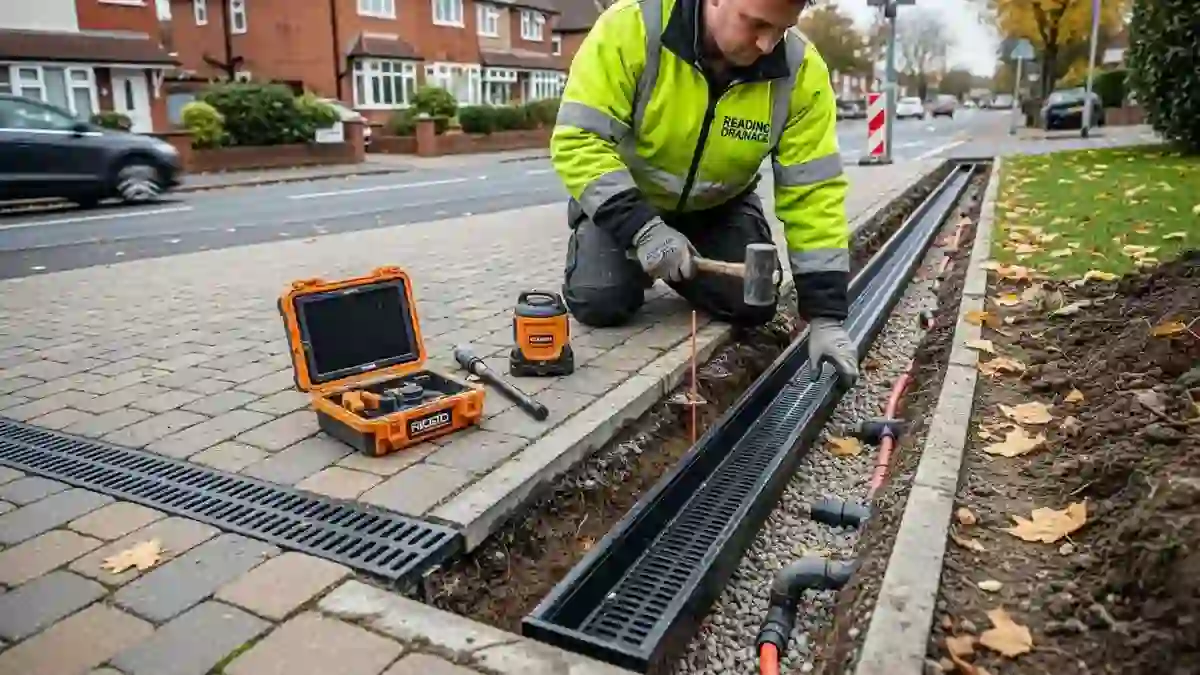
For homeowners in Bracknell, effective driveway drain installation is critical to preventing structural damage and property flooding. To mitigate standing water, you must prioritize proper pipe sizing, correct gradient, and high-quality materials. Key solutions range from channel drains and French drains to permeable paving, depending on your driveway’s slope and surface. Essential maintenance includes regularly clearing debris to prevent blockages. Ignoring drainage issues can lead to severe subsurface erosion, with repair costs often escalating by 40% annually if left unaddressed. Selecting experienced local contractors over national franchises ensures cost-efficiency, technical expertise, and tailored solutions for Bracknell’s unique soil conditions.
Managing water runoff in Bracknell—from the historic banks and the bustling area around Bracknell—requires a nuanced approach. Our team has spent years navigating the clay-heavy soils and sudden downpours typical of this region. We understand that a driveway isn’t just a parking space; it’s a critical piece of your home’s infrastructure.
Technical Analysis: The Mechanics of Drainage Failure
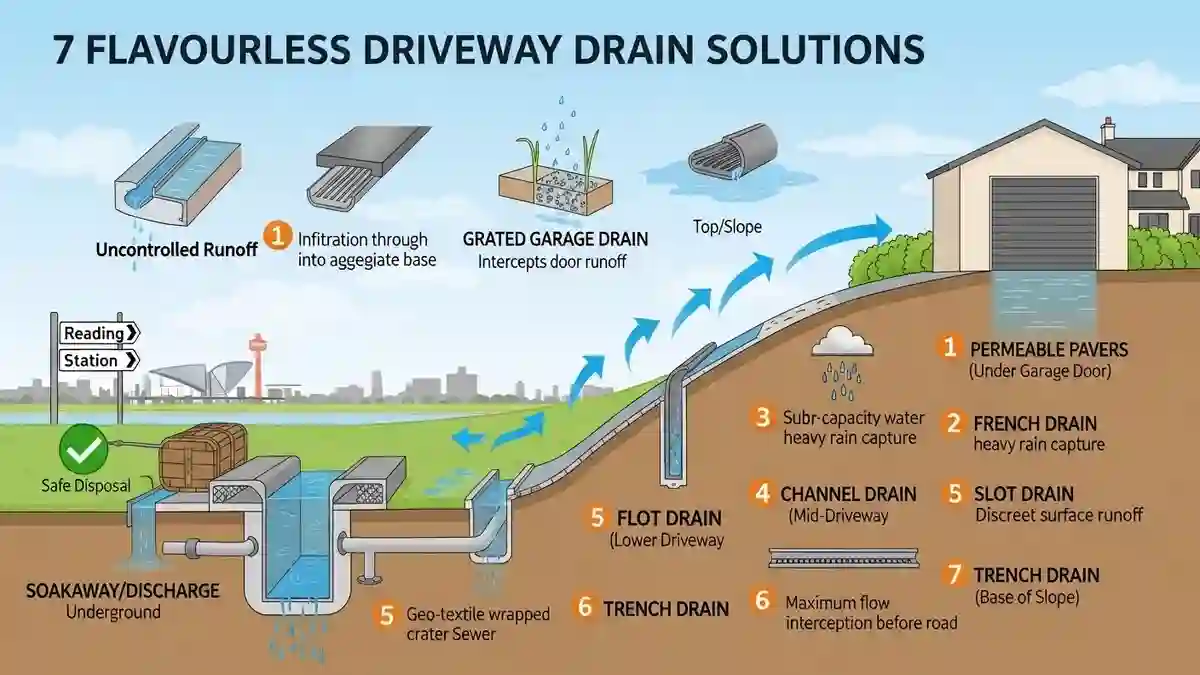
When a driveway fails, it is rarely due to a single event but rather a cascade of physical and mechanical failures.
Consider the tensile strength of your driveway substrate. When water pools due to poor grading, it infiltrates the sub-base. In concrete or asphalt, this leads to a buildup of hydrostatic pressure. As water enters micro-fractures, it exerts force against the surrounding material. During our inspections, we often utilize Ridgid inspection cameras to identify where soil saturation has compromised the structural integrity of the base. If water remains trapped, it cycles through freezing and thawing. This process exerts massive outward pressure, eventually leading to spalling and complete surface failure. Without a properly installed trench drain to intercept this flow, your driveway essentially becomes a reservoir, accelerating the degradation of the pavement binder.
How much will this cost me if I wait?
Procrastination is the most expensive variable in drainage. If you currently have standing water, you are paying a “deferred maintenance tax.”
Initially, a localized repair might cost a few hundred pounds. However, if you wait until the base layer is compromised, you face:
- Surface Replacement: Once the sub-base shifts, the entire surface—whether asphalt or interlocking pavers—will need to be excavated.
- Increased Labor: Dealing with saturated, unstable soil requires expensive stabilization techniques.
- Peripheral Damage: Water often migrates toward your home’s foundation, where the cost of a damp-proof course repair can easily exceed £5,000.
- The Golden Rule: Addressing drainage today is always 30–50% cheaper than repairing a collapsed driveway next year.
What are the 3 signs a national franchise is overcharging me?
In our experience serving the Bracknell area, we often encounter residents who have quoted exorbitant prices. Look out for these red flags:
- The “One-Size-Fits-All” Quote: They suggest a massive, unnecessary excavation project without performing a site-specific survey or using diagnostic tools like Wincan software to map your existing pipework.
- Lack of Local Knowledge: They fail to mention the local Bracknell drainage bylaws or the specific permeability challenges posed by the local geology.
- Aggressive Upselling: They push high-margin, proprietary “miracle” systems rather than standard, high-quality industrial materials that offer better performance at a fraction of the price.
Is DIY channel drain installation in a concrete driveway realistic?
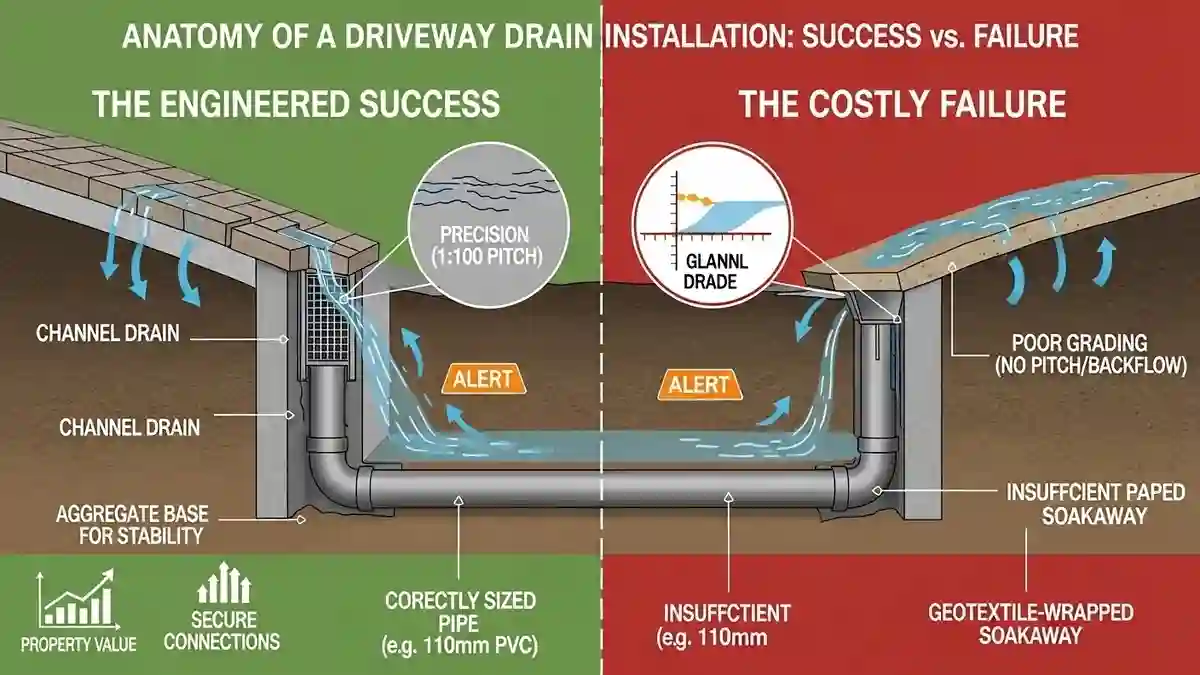
Many DIYers attempt to install channel drains to save money. While the concept is simple, the execution is where most fail. We often see DIY installations where the driveway drainpipe sizing and depth requirements are ignored, leading to backflow.
If you are tackling a DIY channel drain installation in a concrete driveway, you must ensure the concrete is cut with a precision diamond blade and that the drain is set on a bed of high-strength, non-shrink grout. If the pitch isn’t perfect—at least 1:100—your drain will become a sediment trap rather than a water exit.
What is the best method for driveway drain installation without digging up the entire driveway?
If you’re worried about your landscaping, there are trenchless or semi-trenchless options. Modern techniques allow us to install a grated drain installation under garage door and driveway areas by cutting only a narrow channel. We use specialized equipment, such as Whale Tankers, for high-pressure cleaning of existing lines, often proving that you don’t need a full excavation to restore functionality.
How do pros decide between a slot drain vs. a channel drain for driveways?
The choice between a slot drain vs channel drain for driveways depends on aesthetics and traffic load.
- Channel Drains: Offer high-volume capacity and are ideal for driveway drainage solutions in low spots during heavy rain.
- Slot Drains: Sleek, discreet, and perfect for modern minimalist designs. However, they are harder to clean. If you have heavy silt-laden runoff, a wide-grate channel drain is usually the superior choice.
Essential Best Practices
Driveway French drain installation steps residential
- Excavate a trench with a consistent downward slope.
- Line the trench with a high-quality geotextile fabric to prevent silt intrusion.
- Lay a perforated pipe, ensuring it is correctly sized for the catchment area.
- Backfill with washed aggregate (drainage stone).
- Fold the geotextile over the top and cap with decorative gravel or soil.
Common mistakes during driveway drain installation
Driveway drain maintenance and cleaning tips
Final Thoughts
Whether you are looking for the best permeable driveway drain solutions for sloped driveways or need professional local driveway drain installers near me, remember that quality materials and precise grading are non-negotiable. Don’t let a small puddle become a structural disaster.
FAQs
Do driveway drains need planning permission?
Can driveway drains connect to sewers?
Is permeable paving better than channels?
How often should grates be replaced?
Can tree roots damage my drains?
Yes, tree roots are a leading cause of underground drainage failure. They can penetrate small cracks in pipes, causing blockages and structural collapse over time, often requiring professional camera inspections to locate and clear them effectively.
Talk to your local Bracknell Drainage specialist
We are always happy to arrange a free site assessment and no obligation quotations for any work you might need. Alternatively, you can call our emergency hotline number on