
Why Commercial Kitchen Fatbergs Are Worse Than You Think
Stop commercial kitchen fatbergs before they ruin your ROI. Our Bracknell experts explain the chemistry of drainage failure, how to avoid overcharging, and the high cost of ignoring grease management.
- 7 min read
Key Insights Summary

Commercial kitchen fatbergs—masses of solidified fats, oils, and grease (FOG)—are catastrophic drainage failures that go beyond simple clogs. In Bracknell, ignoring these blockages risks severe structural damage to plumbing, potential closures by Thames Water, and fines under the Water Industry Act. Preventing these requires proactive grease management, specifically high-efficiency interceptors and rigorous staff training. If ignored, the cost of emergency extraction can escalate into thousands of pounds, often exceeding the price of routine maintenance by fivefold. Early intervention is the only way to safeguard your facility’s operational continuity and avoid environmental non-compliance.
Managing a commercial kitchen in Bracknell requires more than just culinary skill; it demands a robust defense against the silent, subterranean menace that threatens your bottom line: the commercial kitchen fatberg. Our team has spent years navigating the drainage networks from the historic streets in the local area to the bustling conduits beneath the road and the Shopping Center. We have seen how a single neglected grease trap can bring a thriving business to a grinding halt.
The Difference Between Fatbergs and FOG in Kitchens
It is a common misconception that FOG (fats, oils, and grease) and fatbergs are the same. In reality, FOG is the raw material, while a fatberg is the resulting geological disaster. FOG enters your drainage system as liquid waste. As it cools and encounters calcium-rich minerals or foreign objects, such as wipes, it transforms.
Technical Analysis: The Chemistry of Drainage Failure
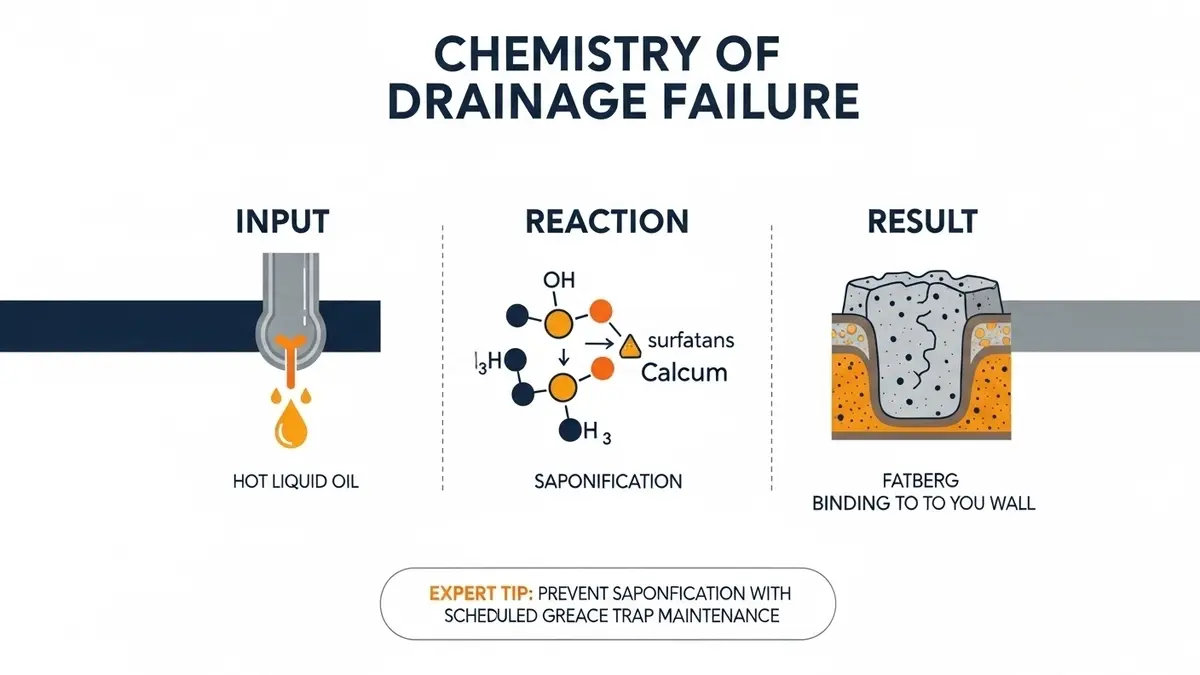
From a technical standpoint, the formation of a fatberg is not merely a physical accumulation; it is a chemical maturation process. When vegetable oils and animal fats are discharged, they are susceptible to hydrolysis. In the presence of moisture and surfactants (soaps used in dishwashing), fats can undergo saponification—the process of converting fats into soap-like substances.
These semi-solid soaps then act as a binder, increasing the tensile strength of the blockage. As layers of grease bond with inorganic debris, the mass gains structural integrity. In our experience using Wincan software for CCTV inspections, we often see these masses solidify to the hardness of concrete. Once the pipe’s cross-sectional area is reduced, the flow velocity drops, further accelerating the deposition of solids—a self-reinforcing cycle of failure.
Signs of a Fatberg in Commercial Kitchen Pipes
How do you know if you are sitting on a ticking time bomb? Watch for these indicators:
- Slow-draining sinks: Water pooling during peak service.
- Gurgling noises: Air trapped behind a developing obstruction.
- Foul odors: The smell of rancid fat wafting from floor drains indicates anaerobic bacterial activity within the pipe.
How Much Will This Cost Me if I Wait?
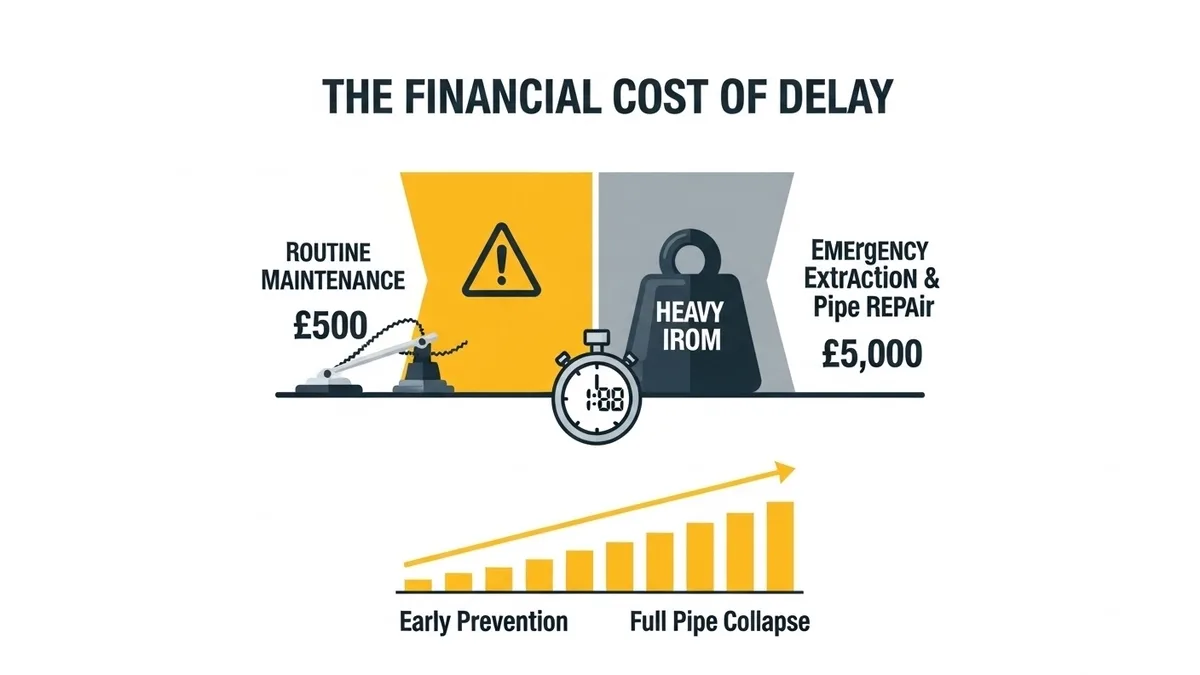
Suppose you ignore these signs, the “emergency premium” kicks in. While routine maintenance might cost a few hundred pounds, emergency commercial kitchen fatberg removal services can cost thousands. You are paying for:
- Out-of-hours callouts: Double or triple the standard hourly rate.
- Specialist Equipment: Deploying Whale Tankers for high-pressure water jetting or vacuum suction.
- Property Damage: The cost of commercial kitchen fatberg damage often includes floor excavation to replace collapsed pipework.
In short, waiting to act can turn a £500 preventative service into a £5,000 emergency recovery mission.
What Are the 3 Signs a National Franchise Is Overcharging Me?
If you are managing a site in Bracknell and feel your current drainage contractor is inflating costs, watch for these red flags:
- “Mystery” Disposal Fees: They charge for “specialized disposal” without providing a valid Waste Transfer Note (WTN) compliant with local regulations.
- Lack of Visual Evidence: They perform a “clean” but refuse to provide footage from a Ridgid inspection camera showing the pipes’ condition before and after.
- The “One-Size-Fits-All” Chemical Pitch: They push expensive commercial kitchen fat-removal chemicals without diagnosing the root cause of why your grease trap is failing to contain FOG in the first place.
How to Prevent Commercial Kitchen Fatbergs
The best grease trap for commercial kitchen fatberg prevention is appropriately sized for your peak flow. Our team consistently recommends active biological dosing systems combined with passive interceptors
Training Staff on Commercial Kitchen Fatberg Prevention
Your most effective tool is not a chemical, but a policy. Ensure your team:
- Scrapes, doesn’t rinse: All plates must be dry-scraped into the bin waste.
- Label bins: Clearly mark oil disposal containers.
- Regular logbooks: Keep a strict schedule of when grease traps are serviced.
Environmental Effects of Commercial Kitchen Fatbergs
Final Thoughts
Your drainage system is the cardiovascular system of your kitchen. If you are experiencing recurring issues or need an audit of your current grease management systems to avoid fatbergs, we are here to assist.
FAQs
Are Enzymes Effective For Grease Traps?
No. Enzymes are often ineffective for commercial grease traps because they merely liquefy fat, allowing it to move downstream, where it eventually re-solidifies and causes more severe, expensive blockages further along the municipal sewer network.
Should I Pour Coffee Grounds Down?
No. Coffee grounds never fully break down in water and act as a binding agent, clumping with grease. They form dense, sticky masses that adhere to pipe walls, significantly accelerating the formation of dangerous drain clogs.
Can Dishwashers Cause Pipe Fatbergs?
Yes. Dishwashers use high temperatures and detergents that emulsify fats into tiny particles. These smaller particles bypass basic interceptors and then re-congeal deeper in the drainage system, contributing significantly to the formation of massive, hardened fatbergs.
Are Weekly Professional Cleanings Usually Required?
Yes. High-volume commercial kitchens typically require professional grease-trap servicing every 1 to 3 months to remain compliant. Neglecting this schedule almost inevitably leads to emergency backups, foul odors, and costly, unforeseen structural pipe repairs.
Do Drain Screens Prevent Fatberg Formation?
Yes. Drain screens are a critical first line of defense. By physically capturing food solids and debris before they enter the waste stream, they prevent the structural foundation that grease needs to build large, obstructive, and damaging fatbergs.
Talk to your local Bracknell Drainage specialist
We are always happy to arrange a free site assessment and no obligation quotations for any work you might need. Alternatively, you can call our emergency hotline number on