
5 Reasons to Choose Bracknell Drain Relining vs Digging
Avoid costly, messy excavations. Compare Bracknell Drain Relining vs Digging to save your home, time, and money with our expert, minimally invasive, and durable no-dig repair solutions for local drains.
- 5 min read
Key Insights Summary
For Bracknell homeowners and commercial site managers, choosing between Bracknell Drain Relining vs Digging depends on depth, pipe integrity, and location. Relining is generally 30% to 50% faster and eliminates the need to tear up driveways. Key benefits include a 50-year lifespan, minimal surface disruption near the local town centre, and compliance with local environmental standards. While digging is necessary for collapsed pipes, relining offers a seamless, “pipe-within-a-pipe” solution that resists root ingress and chemical corrosion.
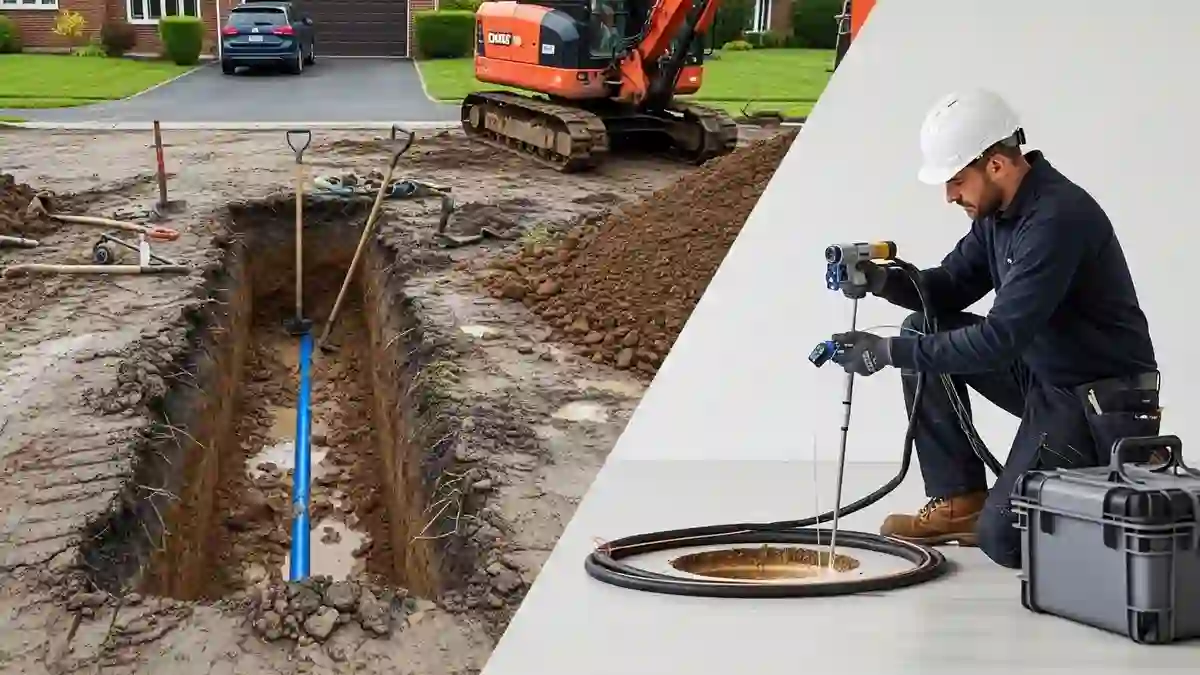
The Great Bracknell Drainage Debate: Relining vs. Digging
When you are dealing with a stubborn blockage near the busy road or noticing damp patches in a garden, the instinct is often to fear the worst: a fleet of JCBs tearing up your property. However, modern drainage technology has evolved. As senior consultants operating across Bracknell, we have seen a massive shift to “Bracknell Drain Relining rather than digging.
In Bracknell, where Victorian clay pipes meet modern PVC systems, the decision to reline or dig is not just about cost—it is about structural longevity and local logistics.
What happens if I wait to fix my drains?
Ignoring a hairline crack or a slow-draining sink is a financial gamble. In the short term, you face recurring “jetting” costs, which typically range from £90 to £180 per visit. However, if that crack allows water to exfiltrate, it washes away the “fines” (the structural soil) beneath your foundations.
If you wait until the pipe collapses, the cost jumps from a standard £600–£1,200 relining job to a full-scale excavation that can easily exceed £3,000-£5,000, especially if we have to navigate utility lines or reinstate expensive landscaping near Bracknell.
1. Minimal Disruption to Your Bracknell Property
Is drain relining better than digging for blocked pipes in Bracknell?
2. Technical Analysis: The Science of Pipe Failure
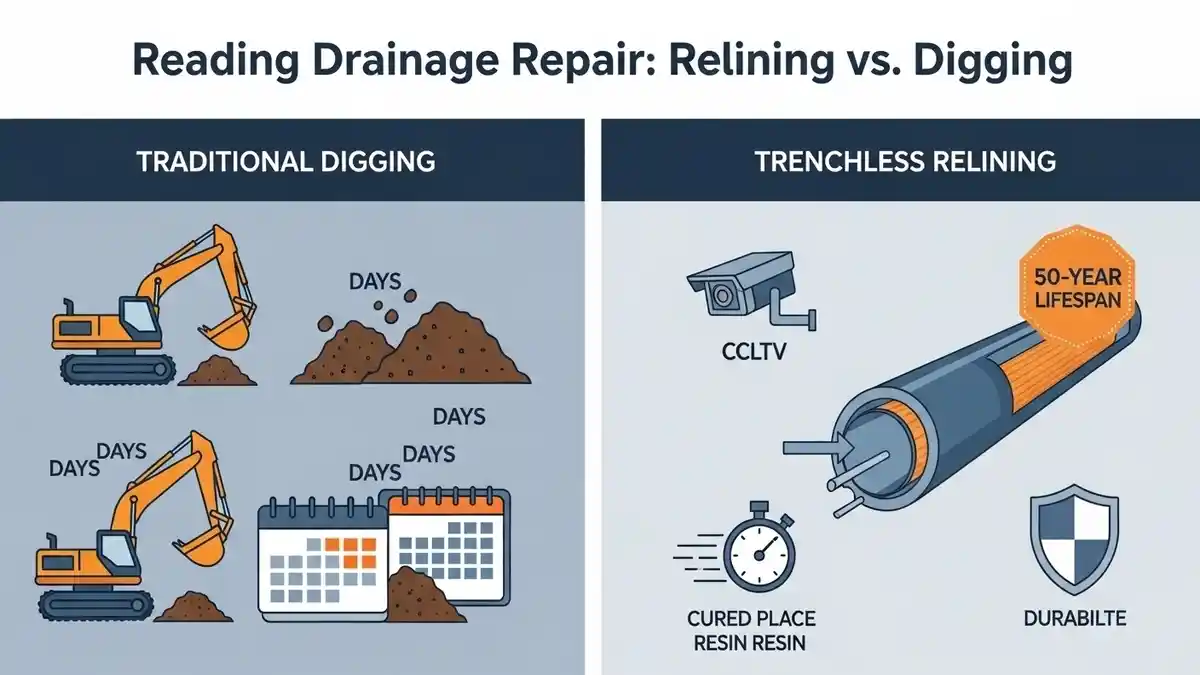
To understand why relining works, we must look at why pipes fail in the first place. In Bracknell’s older residential areas, we frequently encounter Saponification. This is a chemical process in which fats, oils, and grease (FOG) react with alkaline salts in water to form “fatbergs” as hard as soap. Over time, the pressure from these deposits, combined with the tensile stress from shifting soil, causes clay pipes to fracture.
When we install a CIPP (Cured-In-Place Pipe) liner, we are introducing a thermosetting resin. Once cured, this material has a high flexural modulus, meaning it can withstand the vibrations of heavy traffic on roads like Main Road without cracking. The liner is a new pipe that is chemically resistant to hydrogen sulfide gas, which is often found in sewer environments.
3. Long-Term Durability and Root Resistance
How long does drain relining last? Most modern liners, like those we install using Whale Tankers’ equipment for preparation, are rated for a 50-year design life.
Because the liner is seamless, it eliminates the joints found in traditional sectional piping. In leafy areas, tree roots are the number one enemy of drains. Roots seek out the moisture at the joints of clay pipes. By relining, you remove the “entry points,” making the system virtually root-proof.
4. Cost-Effectiveness: Relining vs. Traditional Digging
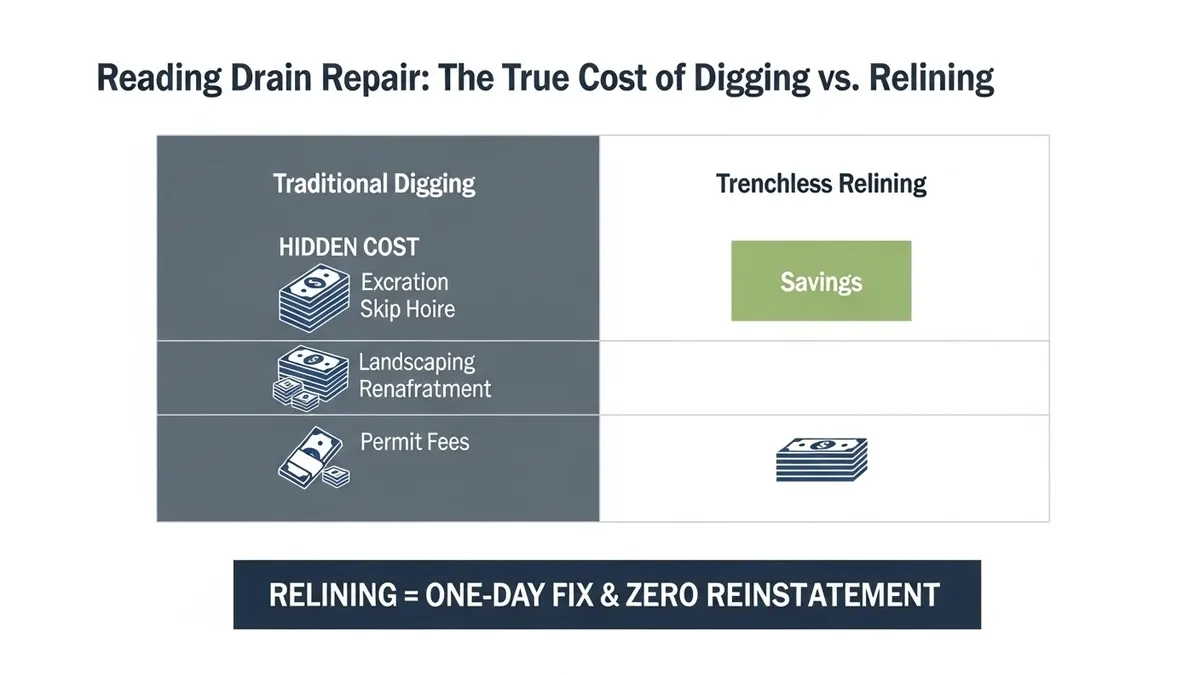
- Permit Costs: Digging near public footpaths often requires a permit from Bracknell local council .
- Reinstatement: Replacing block paving, tarmac, or manicured lawns.
- Labor: Excavation takes days; relining takes hours.
What are the 3 signs a national franchise is overcharging me?
- The “Fixed Price” Trap: If they give a high quote without a Wincan CCTV survey report, they are guessing at your expense.
- The Equipment Upsell: If they claim they need a “specialist” team from another county for a standard 100mm residential pipe.
- Vague Reinstatement Fees: If the quote doesn’t specify exactly how they will leave your driveway, they may hit you with “unforeseen” landscaping costs later
5. Environmental Impact and Council Regulations
Bracknell Council regulations on drain relining increasingly favor no-dig solutions because they reduce the repair’s carbon footprint. Excavation requires hauling tons of spoil to a landfill and bringing in new aggregate. Relining uses minimal raw materials and produces almost zero waste. Furthermore, by sealing leaks, we prevent raw sewage from leaching into the local water table near the River.
Final Professional Recommendation
FAQs
Can relining fix a collapsed drain pipe?
No. Relining requires an existing pipe structure to act as a mold for the resin. If the conduit has completely pancaked or lost its circular integrity, our team must perform a traditional excavation to restore the flow path.
Does insurance cover the costs of trenchless drain repair?
Yes. Most standard building insurance policies in Bracknell cover “accidental damage” to underground services. If your pipes have been compromised by tree root ingress or ground movement, the cost of no-dig technology is typically handled by your provider.
Is the resin used in relining toxic?
Will relining significantly reduce my pipe diameter?
No. The structural liner is only a few millimeters thick. While there is a marginal reduction in the internal bore, the smooth, frictionless surface of the resin actually improves the hydraulic flow rate compared to old, pitted clay pipes.
Can you reline pipes under a house?
Yes. This is the primary advantage of the trenchless method. We can repair structural faults beneath your home’s foundations or expensive kitchen extensions without lifting floorboards or digging up concrete slabs, saving you thousands in potential restoration costs.
Talk to your local Bracknell Drainage specialist
We are always happy to arrange a free site assessment and no obligation quotations for any work you might need. Alternatively, you can call our emergency hotline number on