
The Ultimate Guide: CQC Compliant Care Home Drains
Ensure CQC Compliant Care Home Drains in Bracknell. Our guide covers Regulation 15, Wincan tech, and preventative maintenance to protect residents and cut long-term drainage costs by 50%.
- 15 min read
Key Insights Summary
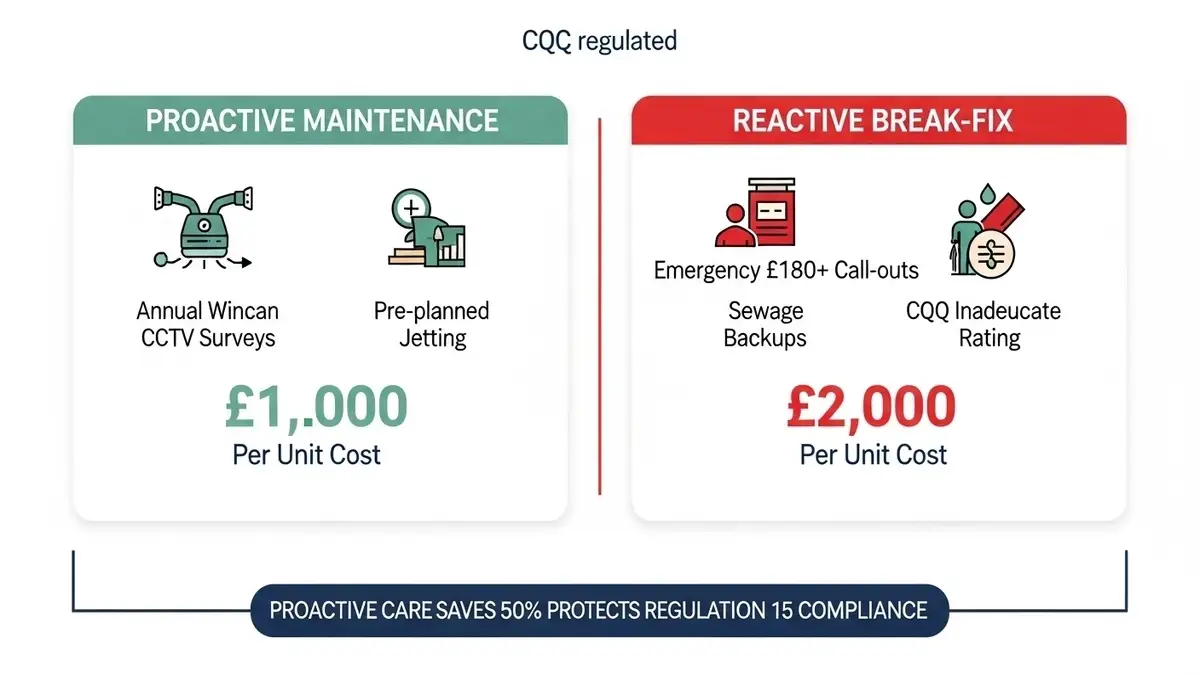
For care providers in Bracknell, achieving CQC guidelines for care home drainage systems is a pillar of Regulation 15 (Premises and Equipment). Neglecting subterranean assets leads to “Inadequate” ratings and potential prosecution. Proactive management using Wincan diagnostic reporting and Ridgid SeeSnake technology reduces maintenance costs by 50%, moving from a £2,000 “break-fix” model to a £1,000 preventative cycle. Our team emphasizes that record keeping for care home drain maintenance CQC is mandatory for demonstrating “Well-Led” governance, especially in Bracknell’s high-risk chalk soil and groundwater zones.
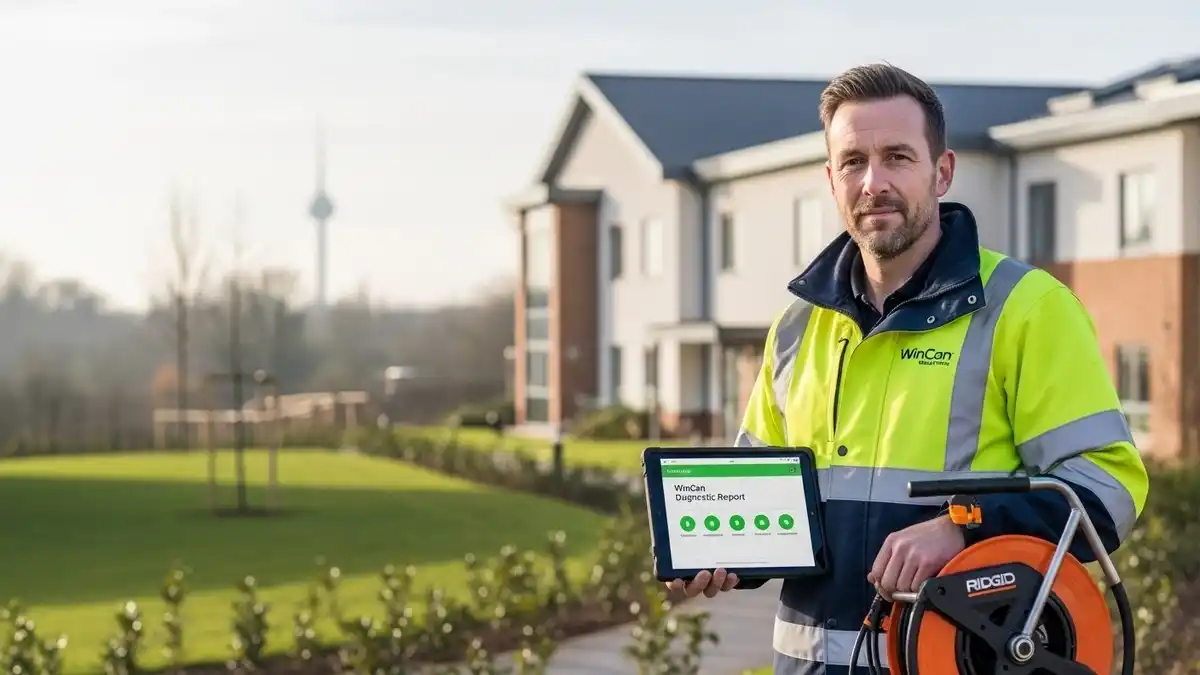
In the adult social care sector, what happens beneath the floorboards is just as critical as the care provided above them. As a Senior Drainage Consultant, I have spent decades helping providers navigate the complexities of subterranean infrastructure. For care homes in Bracknell—from the historic corridors near Main Road to modern facilities overlooking The Blade—drainage is not merely a utility; it is a critical component of Infection Prevention and Control (IPC).
Our team understands that the Care Quality Commission (CQC) views a drainage failure not just as a plumbing issue, but as a fundamental breach of the “Safe” and “Effective” domains. In this deep dive, we explore how to ensure CQC compliance for care home drains, the physics of pipe failure, and the local environmental challenges unique to the Bracknell area.
The Regulatory Framework: Why Drains Matter to the CQC
The CQC’s Single Assessment Framework evaluates how providers manage environmental risks. Two specific regulations form the backbone of drainage compliance:
- Regulation 12 (Safe Care and Treatment): Providers must prevent avoidable harm. A sewage backup or stagnant water in a U-bend is a biohazard that poses an immediate risk to vulnerable residents.
- Regulation 15 (Premises and Equipment): This mandates that premises must be “clean, suitable for the intended purpose, and properly maintained”.
What happens if care home drains fail CQC inspection? A failure can trigger a “Prohibition Notice” or an immediate downgrade to “Inadequate,” which often results in local authorities suspending new placements. For a facility near Street or beside Street, an emergency overflow isn’t just a mess—it’s a regulatory catastrophe.
Why are my care home drains backing up even when we don’t flush wipes?
Many managers are perplexed when blockages occur despite strict “no wipes” policies. The answer often lies in the industrial kitchen. Our team frequently discovers that the primary cause of failure is saponification. This is a chemical process where fats, oils, and grease (FOG) react with the alkaline environment of the sewer and the high calcium content in Bracknell’s hard water to create “metal soaps”—hardened, stalactite-like deposits that narrow the pipe diameter until even small amounts of debris trigger a total system failure.
Technical Analysis: The Physics and Chemistry of Drainage Failure
To provide a true technical analysis, we must examine the structural and chemical stresses on your pipes.
The Mechanism of Saponification
In a care home, the heavy use of detergents and high-temperature dishwashers creates a specific chemical environment. When FOG enters the drain, it breaks down into its constituent parts: glycerol and free fatty acids. These fatty acids then encounter calcium ions, which are prevalent in Bracknell’s water supply (drawn from the local chalk aquifer).
The result is the formation of hardened calcium-based fatty acid salts. These are not soft “grease clogs”; they are rigid, soap-like solids that bond to the inside of the pipe. As these deposits grow, they create turbulence in the water flow, which ironically causes even more grease to drop out of suspension and adhere to the pipe.
Hydrotropism and Root Ingress in Bracknell’s Green Spaces
Bracknell is famous for its mature trees, especially around the Gardens and Street Mall. Tree roots exhibit “hydrotropism”—a biological impulse to seek out moisture. If your drainage pipes have even microscopic cracks, moisture escapes into the surrounding soil.
The roots enter these fissures and, once inside, expand rapidly. This creates a dense mat of root hair that acts as a filter, trapping FOG and sanitary waste. This “composite blockage” is incredibly dense and often requires specialized high-pressure water jetting from a Whale Tanker to clear.
Grounding the Strategy: Bracknell’s Local Drainage Challenges
Bracknell’s geography presents unique challenges for preventative drain maintenance care homes CQC standards. The town sits on a Chalk aquifer, which is highly porous but prone to groundwater flooding.
The Chalk Soil and Groundwater Threat
Unlike river flooding, which recedes quickly, groundwater flooding in Bracknell can last for weeks or months. When the water table rises, it can infiltrate aging sewer lines, causing them to “surcharge” or overflow. For care homes located in the Valley or the low-lying areas, this means your drainage system must be structurally sound to resist external hydraulic pressure.
A Local FOG Hotspot
A 2022 survey mapping blocked drains in Bracknell identified Road and near Street as “hotspots” due to high-density commercial activity and aging infrastructure. If your care facility is located near these areas, your drainage maintenance schedule CQC registered care homes must be more aggressive to account for the “loading” on the local network.
Diagnostic Mastery: Wincan AI and Ridgid SeeSnake Technology
Gone are the days of “poke it and see.” To satisfy CQC drain inspection requirements for care homes, you need objective, data-driven evidence.
Wincan VX and AI Reporting
We utilize WinCan VX, the industry standard for sewer assessment. This software allows us to grade your pipes from 1 (Excellent) to 5 (Failed) based on the MSCC5 (Manual of Sewer Condition Classification).
With WinCan AI, we can automatically detect defects in real-time, ensuring that human error doesn’t miss a hairline fracture that could harbor bacteria. These reports are essential for the “Well-Led” part of your inspection, providing a clear audit trail of your infrastructure’s health.
High-Definition Imaging with Ridgid
For the actual survey, our team specifies Ridgid SeeSnake camera systems. These cameras feature TruSense technology, which provides High Dynamic Range (HDR) imagery. In a dark, wet pipe, HDR is vital for distinguishing a minor stain from a structural crack. Combined with TiltSense (an inclinometer that measures the “pitch” or slope of the pipe), we can identify where water is “ponding,” which is a major risk factor for Legionella colonization.
Water Hygiene: The Invisible Link to Your Drains
A major focus of a CQC audit is the legionella risk assessment drainage systems care homes CQC. While most managers focus on tanks and taps, the drainage system is a primary source of aerosolized water—the mechanism by which Legionella is inhaled.
HSG274 Compliance and Record Keeping
To comply with HSE HSG274 and ACOP L8, care homes must maintain a rigorous schedule :
- Weekly Flushing: All “little-used outlets,” such as guest bathrooms or basement sinks, must be flushed to prevent water stagnation.
- Quarterly De-scaling: Showerheads and hoses must be cleaned to remove the biofilm where bacteria thrive.
- Monthly Temperature Checks: Distribution temperatures must be logged at “sentinel” points.
Our team advocates for integrating these logs into your digital record keeping for care home drain maintenance CQC. When an inspector asks for proof of your water hygiene, having a synchronized digital dashboard (like WinCan Web) that shows both your internal flushing and your subterranean pipe condition is the hallmark of an “Outstanding” provider.
Economic Strategy: The High Cost of Reactive Maintenance
One of the most common questions we receive is: How much will this cost me if I wait until the kitchen floods?
The Financial Reality: £1,000 vs. £2,000
UK research into residential and social care housing stock is definitive: a reactive “break-fix” approach costs approximately £2,000 per unit over five years. In contrast, a planned, preventative drain maintenance care homes CQC standards model costs £1,000 per unit—a 50% saving.
The “hidden” costs of waiting include:
- Emergency Call-Out Fees: Often £180+ compared to a standard £60 fee.
- Operational Downtime: If your catering kitchen is flooded, the cost of emergency meal provision and sanitation can exceed £5,000 in a single weekend.
- Insurance Denial: If you cannot produce a drainage survey CQC compliance care home cost log, insurers may argue that the damage is due to “gradual deterioration” and refuse to pay for water damage.
What are the 3 signs a national franchise is overcharging me?
When choosing CQC approved drain contractors for care homes, local accountability is key. National franchises often operate on a “commission culture” where technicians are pressured to upsell. Watch for these red flags:
- Quotes Given Over the Phone: An honest engineer cannot price a job without seeing the access points and pipe condition. Phone quotes are often “bait” for a much higher on-site bill.
- The “Jinxed Pipe” Story: If a contractor claims your pipe is “jinxed” or “special” and requires an “unknown amount” of work without showing you the CCTV footage, you are being scammed.
- Unnecessary Hydro-Jetting: While jetting is powerful, it isn’t always needed for a simple sink blockage. If they insist on the most expensive service before even trying a basic snake, get a second opinion.
Advanced Remediation: The Science of No-Dig Repairs
If a survey reveals a structural defect, the old solution was excavation. For a care home on a busy street like main Road, digging up the driveway is a nightmare. Instead, we use Cured-In-Place Pipe (CIPP) lining.
Resin Selection: Why Material Science Matters
CIPP involves inserting a resin-saturated liner into the old pipe and “curing” it to form a new, seamless pipe inside the old one. The science of resin selection is critical here. For care homes, we often recommend Vinyl Ester resin.
- Vinyl Ester: Offers superior resistance to the high temperatures of commercial laundry and dishwasher effluent. It combines the toughness of epoxy with the flexibility of polyester.
- Tensile Strength: A properly installed CIPP liner can last for 50 years or more, providing a permanent solution that satisfies the CQC’s requirement for “properly maintained” premises.
Sustainable Solutions: SuDS and Therapeutic Care
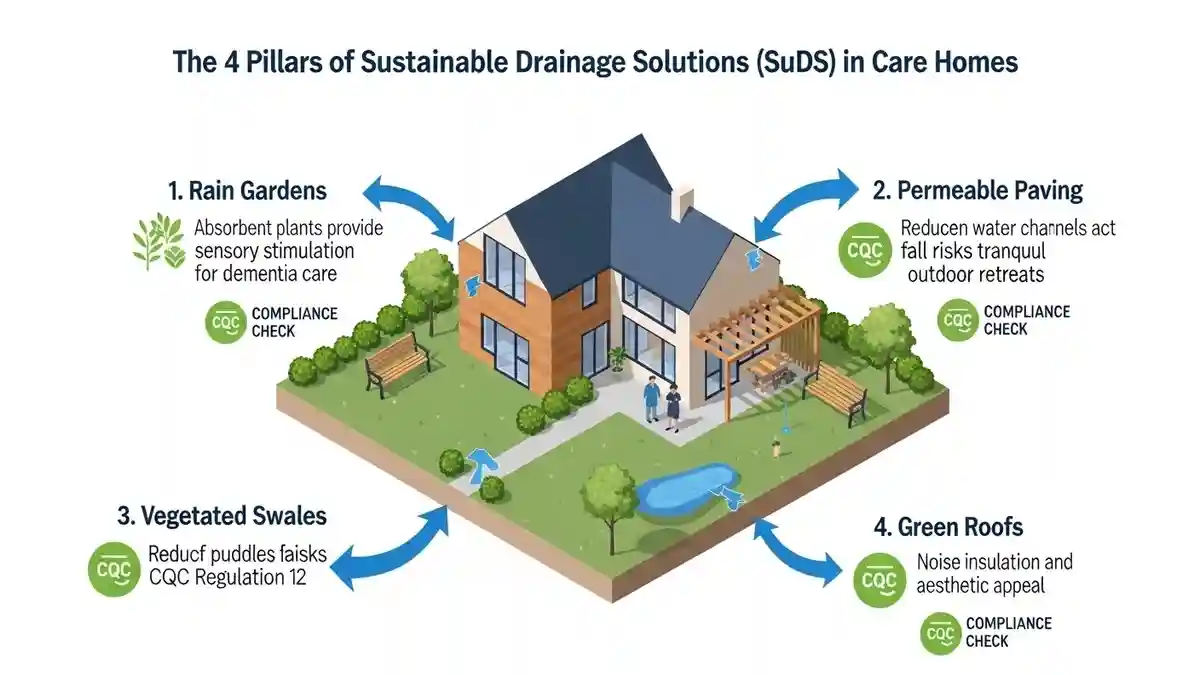
The future of sustainable drainage solutions CQC care home design is the integration of SuDS (Sustainable Drainage Systems). In Bracknell, Policy EN18 of the Local Plan encourages SuDS to manage surface water runoff, which often plagues the surrounding area.
Can a rain garden actually help my residents with dementia?
SuDS features like rain gardens and swales do more than manage water; they create “Healing Environments.”
- Sensory Stimulation: The sound of water and the variety of plants in a rain garden provide sensory engagement for residents with dementia, helping to reduce agitation and stress.
- Improved Mobility: SuDS help prevent puddles and ice on walkways, directly reducing the risk of falls—a major CQC safety concern.
- Nature-Based Recovery: Studies show that exposure to green infrastructure can lower blood pressure and accelerate recovery times in healthcare settings.
| SuDS Feature | Functional Purpose | CQC / Therapeutic Benefit |
|---|---|---|
| Rain Garden | Filters and slows runoff. | Sensory stimulation; biodiversity. |
| Permeable Paving | Allows water to soak through. | Puddle prevention; fall risk reduction. |
| Green Roof | Absorbs rainwater at source. | Noise insulation; aesthetic appeal. |
| Swales | Natural conveyance of water. | Visual focal points; stress reduction. |
The Lead Engineer’s Story: The "Midnight Surcharge" in The Local Area
To illustrate the importance of proactive management, consider a facility our team recently assisted near Bracknell. The home had skipped its annual CCTV survey to save on drainage survey costs, CQC compliance, and care home costs.
During a period of heavy rainfall—common in the Valley—the external main sewer surcharged. Because the home’s internal pipes had been narrowed by years of saponified grease, the back pressure was too high. Sewage began backing up into the ground-floor residents’ bathrooms at 2:00 AM.
“We arrived with the Whale Tanker to find the night staff in a state of panic,” our Lead Engineer recalls. “We used a Ridgid SeeSnake to find the blockage—a mass of ‘flushable’ wipes that had snagged on a calcified grease deposit. If they had done the £300 survey, we would have seen that deposit months ago and cleared it for a fraction of the cost.”
The facility was later inspected by the CQC and received a “Requires Improvement” rating for the Well-Led domain, specifically citing a failure to manage environmental risks.
Best Practices for Care Home Drain Hygiene CQC
To ensure your facility remains compliant and operational, our team recommends the following “Best Practice” framework:
- Implement a Maintenance Schedule: Move away from reactive repairs. Establish a drainage maintenance schedule CQC registered care homes that includes annual CCTV surveys and bi-annual grease trap cleaning.
- Digital Record Keeping: Use standardized reporting. Ensure your contractor provides Wincan reports that follow the MSCC5 standard. This provides the “Well-Led” evidence inspectors look for.
- Local Expertise: Use choosing CQC approved drain contractors for care homes who understand Bracknell’s specific hydrogeology and the high water table of the local river valley.
- Integrated Water Management: Link your drain maintenance with your legionella risk assessment drainage systems care homes CQC. Flushing a tap is useless if the drain it flows into is a stagnant breeding ground for bacteria.
Conclusion: Protecting the Foundation of Care
Drainage is often “out of sight, out of mind” until it becomes a crisis. However, for a CQC-registered provider in Bracknell, subterranean infrastructure is the foundation of a safe, hygienic environment. By investing in preventive drain maintenance, meeting CQC standards, utilizing advanced technology like Wincan AI, and understanding the chemical processes of saponification, you protect your residents and your reputation.
Whether your facility is a historic building on Main Street or a new development in South Bracknell, the goal is the same: to move from a state of chaos and high-cost, reactive repairs to one of strategic control. Our team is dedicated to helping you achieve that “Outstanding” rating by ensuring your drains are as well-managed as your care plans. Don’t wait for the flood—take control of your infrastructure today.
FAQs
Is a drainage survey required for CQC registration?
No. While not a legal prerequisite for registration, the CQC requires evidence that facilities are “fit for purpose.” Surveys provide the necessary documentation to satisfy Regulation 15 requirements for properly maintained premises and effective risk management strategies.
Does CQC require specific drain cleaning schedules?
Yes. Regulation 15 requires providers to maintain hygiene standards. Inspectors look for a designated lead for cleaning, documented schedules, and evidence of monitoring to ensure the premises remain safe and suitable for vulnerable care home residents.
Can blocked drains trigger a CQC downgrade?
Yes. Systemic failure to manage infrastructure and hygiene often results in an “Inadequate” rating. Such failures are treated as breaches of safe care and treatment regulations, potentially leading to special measures or even criminal prosecution.
Should care homes install commercial grease traps?
Yes. To comply with hygiene and maintenance standards, facilities must prevent the buildup of fat. Surveys show high-density areas like Bracknell’s Gun Street frequently suffer from blockages caused by improper waste disposal, which grease traps effectively mitigate.
Are records of water flushing mandatory for CQC?
Yes. Under the Well-Led domain, inspectors scrutinize record-keeping for safety protocols. This includes mandatory logs for weekly flushing of infrequently used outlets and quarterly de-scaling of showerheads to prevent Legionella outbreaks in high-risk care environments.
Talk to your local Bracknell Drainage specialist
We are always happy to arrange a free site assessment and no obligation quotations for any work you might need. Alternatively, you can call our emergency hotline number on